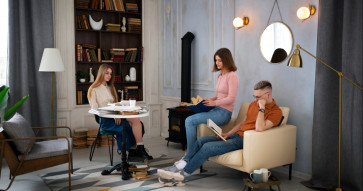
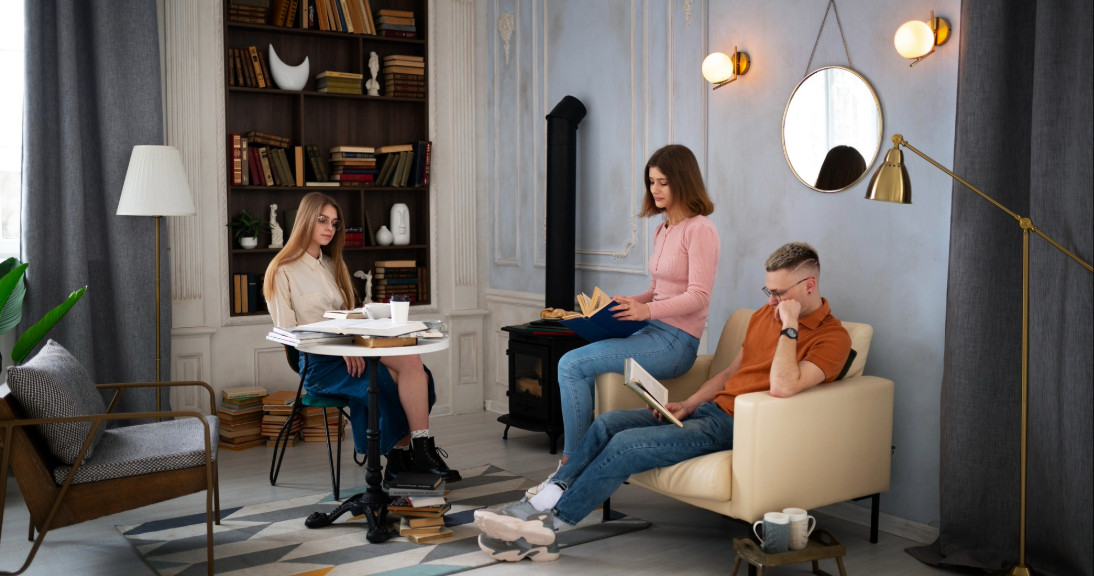
A home library furniture does not need to be a room filled with bookshelves. Even a small quiet corner can become a place to read, relax and spend time away from screens. The right furniture can make the space practical without making it feel crowded.
Whether you have a room with an empty wall, a bedroom corner or a small area beside a window, thoughtful planning can help you make better use of the space. Comfortable seating, storage, suitable lighting and sized furniture can turn an unused area into a place you actually want to use.
Decide Where Your Reading Nook Furniture Will Go
The first step is finding the location. A quiet corner in the living room bedroom, hallway, home office or under a staircase can work if there is enough room for comfortable seating and storage.
Natural light can make a reading area more pleasant so a space near a window can be a choice. However avoid placing furniture where direct sunlight makes reading uncomfortable or could affect books over time. If you mainly use the space in the evening make sure there is room for a reading lamp.
In a shared room choose a location that does not interfere with movement. A little separation can help the reading corner feel like its space.
Choose Furniture Based on the Available Space
Furniture should fit the room than simply fill it. Before buying anything measure the area. Note the position of doors, windows, electrical outlets and existing furniture. This can prevent a chair or bookshelf from making the space difficult to use.
A larger room may have space for an armchair, side table, floor lamp and full-height bookcase. Smaller spaces may work better with a chair, narrow bookshelf or wall-mounted storage.
When choosing home library furniture, consider comfort and proportion. A large chair may look inviting. Feel overwhelming in a small corner while a narrow chair may not provide enough comfort for longer reading sessions.
Leave space around each piece so you can sit, stand and reach your books comfortably.
Select Comfortable Seating
A reading corner should be comfortable enough for you to stay there for a while. An armchair is a choice for a traditional setup because it provides support and creates a clear focal point.
If you have space a small lounge chair or loveseat can give you room to stretch out. In areas choose a chair with a compact footprint. A cushioned bench can also work well beneath a window especially when it includes storage.
Reading nook furniture should match the way you actually use the space. If you read for periods a simple chair may be enough. For reading sessions pay more attention to back support, seat depth and overall comfort.
Add Practical Book Storage
Books are usually the feature of a home library furniture so storage should be practical and accessible. Start by considering how books you already have and whether your collection is likely to grow.
A traditional bookcase works well when you have wall space. Tall shelving can make use of space without taking up too much floor area. In rooms narrow shelves or built-in storage can keep the room more open.
Do not feel that every shelf needs to be full. Leaving some space between books makes the collection easier to browse and prevents the room from looking crowded.
You can also combine books with personal items, such as photographs or small decorative pieces while keeping accessibility as the priority.
Make Lighting Part of the Plan
lighting is essential in a reading space. Even if the area receives plenty of daylight you will still need a light source for evenings and darker days.
A floor lamp beside an armchair works well in spaces while a table lamp can be useful beside a chair. Wall-mounted lighting is another option when floor space is limited.
Position the light so it illuminates your book without creating glare or casting shadows across the page. If your reading area is near a window make use of light during the day.
Include a Small Table for Convenience
A side table can make a reading corner Ideas much more practical. It provides space for a book, reading glasses, notebook or drink without requiring you to leave your seat.
The table does not need to be large. Choose one that fits comfortably beside the chair while leaving walking space. Round or compact tables can work well in smaller corners.
Consider the table height well. If floor space is limited, furniture with built-in storage or surfaces can provide functionality without adding extra pieces.
Match the Rooms Existing Style
Your reading corner should feel like part of your home rather than a separate setup. Consider the colours, materials and furniture already used in the room before choosing pieces.
Wooden shelving and upholstered seating can create a look while simple shelving, clean lines and neutral furniture can suit a modern space. The pieces do not have to match but they should work well together.
Reading corner ideas can be as simple as matching a chair with existing furniture or using a similar finish for shelving and tables. When choosing home library furniture, keep the setup practical and avoid adding many decorative items. A comfortable chair, useful storage, good lighting, and a small table may be all you need.
Make Small Spaces Work Harder
A limited area can become a useful reading space. The key is choosing furniture that serves more than one purpose and making good use of walls and unused areas.
A storage bench can provide both seating and space for books. Tall shelving can use space while keeping the floor clear while a slim side table provides a useful surface without taking up much room.
Always measure carefully before purchasing furniture. Pay attention to a chair's depth well as its width because a piece that technically fits may still make the walkway uncomfortable.
Some of the reading corner ideas involve simple changes rather than a complete room redesign. An unused corner, comfortable chair and positioned lamp can be enough.
Build the Space Around Your Reading Habits
There is no layout that works for every reader. Some people prefer an armchair while others enjoy stretching out on a bench or lounge chair. Your home library furniture should reflect how you actually read.
If you mainly read books, keep your shelves within easy reach. If you use a tablet or e-reader a nearby table can give you a place to set it down. If you take notes while reading make sure you have a surface.
Start with the essentials of trying to complete everything, at once. Choose your seating first then add storage, lighting and smaller pieces according to what the space needs.
With planning even a modest corner can become a comfortable place to read. You do not need a room or an extensive book collection. You simply need furniture that fits your space, supports your habits and makes you want to sit down with a book.