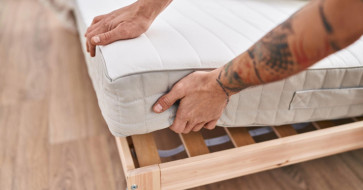
A certain kind of denial is shown when it comes to mattresses. Even long after the bed has ceased to function properly, such as by sagging in the middle, failing to relieve old pressure points, and causing you to wake up with a stiff shoulder or a tender back, most people continue to sleep on it. They aren't unaware of the problem, but rather the discomfort develops so slowly that it begins to seem normal, and it's easy to ignore what is normal.
At Willhite Furniture, we frequently hear a variation of this story from homeowners in Santa Barbara. They will casually refer to the fact that they have not been getting a good night's sleep for years. When we bring up the mattress, there's usually a pause, and then they admit that it's been the same one since they moved house, since they got into a relationship, sometimes even for a decade or so. No one really intends to let their sleep suffer for so long; it just happens, night by night in an uncomfortable way, until discomfort takes the place of being an occasional problem.
That is the reason why upgrading your mattress usually seems to have a more significant impact than almost any other alteration you can make to your home; it doesn't simply enhance a piece of furniture but instead gently brings back something people have stopped expecting from themselves, namely a night's sleep that actually feels like rest.
Why sleep quality erodes without anyone noticing
One of the reasons this problem seems to be easily overlooked is that mattresses tend to fail over time. This support fades over time, not all at once. A shoulder pain feels on one side, and rotating it is more difficult than it had been before. At the time, it's not like there's anything to worry about; it's just a part of the morning, a normal time.
In this situation, the body responds by hiding the real problem; individuals then explain their sleep difficulties as being due to ageing, to stress, or to their busy timetable, even though the true cause has been there all along. This kind of failure to identify the real issue is common, which is why so many people delay far too long in finally replacing a mattress that has clearly ceased to offer proper support.
There is also an emotional aspect to the delay. Since a mattress is a major purchase, delaying the decision can seem simpler than having to face the financial and logistical expenses involved in making the change finally. However, each night spent on poor support also has its own quiet cost, a cost which grows much more than most people realise.
It is similar to the way individuals put off other overdue changes, such as a car that needs genuine repairs or a job that has stopped bringing them satisfaction. The discomfort just becomes background noise, something tolerable, and thus the delay can continue right on until something finally causes the matter to be addressed: an injury, a partner pointing out that you have been restlessly uneasy, or a holiday when a hotel bed suddenly makes you realise what real support is like. Mattresses tend to follow the same pattern, being quietly neglected until the difference between the way you sleep and the way you could sleep becomes impossible to ignore.
Santa Barbara life and the demand for genuine rest
Santa Barbara attracts individuals who appreciate a slow and thoughtful style of living, including taking morning walks along the coast, spending time outside, and adopting a way of life oriented toward wellness rather than a constant rush. This attitude towards life also applies to the way people view sleep, even though the mattress itself is often ignored for many years, even though all the other aspects have been carefully thought out.
It is rather contradictory that a house should contain considered, wellness-focused decisions, a healthy diet, consistent physical activity, and time spent outdoors, yet each night be compromised by a mattress that is working against all these efforts. Since sleep forms the basis on which the rest of that way of life depends, homeowners in Santa Barbara.
And there's a real beat to it. There are a lot of people in this area who hit the streets early in the morning, either before the heat of the day or before the coastal fog rolls in. How good those mornings are largely depends on how good the night before was. If a mattress allows for deep, undisturbed sleep, it's no longer a luxury; it is an investment in mornings people do want.
What a real upgrade actually addresses
Mattresses don't all have the same problems, and that is one reason it is necessary to understand what the real issue is rather than just go for whatever is currently popular. A number of typical problems tend to lead most people to eventually decide on making a change.
• Stiffness/soreness that goes away in an hour or so but comes back every morning
• A visible dip or sag in the middle that pulls the body toward the centre of the bed
• Temperature discomfort, waking up too warm despite a comfortable bedroom
• A general sense of restlessness, tossing and turning rather than settling into deep, sustained sleep
These problems almost never occur by themselves; most of the time they gradually build upon one another until the person comes to the realisation that they have simply given up on waking up feeling rested.
The psychology of finally sleeping well again
The kind of relief experienced on the first night using a mattress that gives proper support after having used one that did not is noticeable and is often described with a sense of surprise, as if people had forgotten what it was like to have undisturbed sleep. This reaction shows how much poor sleep quality becomes normal over time.
The quality of sleep the night before can affect mood, patience, concentration, and how a day will feel before it even starts. While an upgrade of the mattress might sound like a straightforward piece of furniture, a mattress upgrade can affect almost any other resource that the individual makes use of, making it one of the largest enhancements that a person can make in their life.
There is also a quiet restorative aspect in allowing yourself to put comfort first. Many people put off making such a purchase because they believe that discomfort should simply be endured. Taking the step of replacing a worn-out mattress is, in a small and real way, an act of self-respect, a choice that shows that rest is important enough to invest in.
Choosing an upgrade that actually fits how you sleep
A mattress upgrade is most effective when it takes into account the way a person actually sleeps, rather than just their general preferences. A person who sleeps on their side requires different support at their shoulders and hips compared to someone who sleeps on their back or on their stomach. With a shared bed, there are other factors to consider, especially concerning motion isolation, since one partner changing position should not disturb the other during the night.
While firmness is important, it is frequently misjudged. A mattress that seems comfortable during a short test in the showroom won't always perform in the same way after a full night of actual use, which is one of the reasons it's important to have advice when making such a purchase; instead of just recommending whatever is currently popular, someone should be able to go over your sleep position, body type, and particular areas of pain.
Material construction also has its own place in this situation. Mattresses with traditional innerspring designs generally give a firmer and more responsive feel, a preference that some people actually have, whereas those with hybrid and layered foam constructions usually provide better contouring support and help relieve pressure points for individuals who wake up sore in the same places night after night. Neither of these methods is better in all cases. The correct choice depends on the person using the mattress, which is why it makes sense to have a genuine conversation when considering an upgrade rather than just getting a general, quick recommendation.
A few signs it might be time for an upgrade
When sleep has seemed less restful than it used to, several well-known signs generally indicate that the problem lies with the mattress.
• You wake up more tired than you expected, even after a full night in bed
• Aches or stiffness show up in the same spots morning after morning
• The mattress visibly sags, especially in the areas where you sleep most
• You sleep noticeably better in a hotel or guest bed than you do at home
• It has been longer than either of you can clearly remember since the mattress was replaced
No single one of these signs is dramatic by itself, but collectively they tend to indicate a mattress that has gradually stopped fulfilling its purpose, even though most people have simply got used to asking for less from their sleep.
Willhite Furniture: restoring rest, one mattress at a time
We at Willhite Furniture consider a mattress to be one of the most important purchases you can make for your home, not on the basis of its cost but because of the direct way in which it affects everyday life. The range of mattresses we offer includes various levels of support and different types of construction, from firm, traditional innerspring models to quilted hybrid and premium varieties that are designed for deeper, more restorative sleep, so that homeowners in Santa Barbara have genuine choices according to how they actually sleep rather than just what looks good in a showroom.
If you're in Santa Barbara and have noticed over the years that your sleep has slowly deteriorated, we should be able to help you get back to true rest. You can visit our showroom in Arroyo Grande, which serves Santa Barbara and the surrounding Central Coast area, or arrange a free service appointment so we can help you select a mattress designed to support the kind of life you actually want to wake up for.
Sometimes the most significant improvement in a home isn't obvious to people; it's the change that gently restores your mornings.